Available on Amazon or directly from me at a discount price.
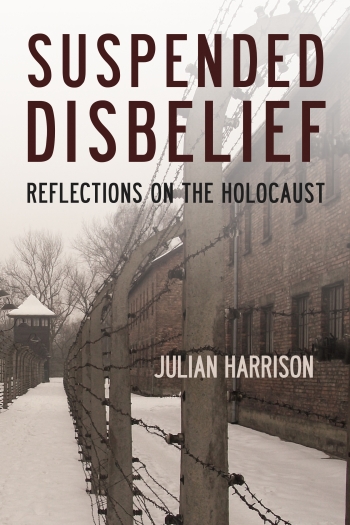
The Holocaust. The darkest chapter in the history of humankind. A pivotal period in humanity’s struggle with the dangers of discrimination and prejudice. The culmination of centuries of antisemitism and yet, paradoxically, the trigger for new forms of anti-Jewish sentiment and action. Its legacy is an ongoing experience in countries, neighbourhoods and homes across the world.
Many words have been written on the Holocaust. Numerous historians have told its story – either wholly or in part – and increasing numbers of testaments are appearing on bookshelves and online. As the generation of survivors and personal witnesses become fewer in number, these remembrances, based on eyewitness testimony, become significantly more valuable and valued. However, fundamental questions remain: What have we learned? What is there still to learn? What should the legacy of the Holocaust actually be? How do we ensure that ‘never again’ really does mean ‘never again’?
In this book, I do not presume to have all those answers. Yet, I wanted to offer some thoughts and reflections that may help the process of addressing these and other questions that something of the magnitude of the Holocaust inevitably leaves us with. Indeed, I feel a sense of personal responsibility to make my contribution.
In saying this, I, of course, have to explain why I feel this way. Though the introduction to the book will attempt to clarify this at greater length, at this moment it is, I hope, suffice to say that there is personal connection as well as interest. An irreconcilable gap in my family history that always leads me back to antisemitism and its most tragic and horrific chapter, has meant that whilst others with more knowledge of their family background can focus on specific locations, periods of time, I cannot do this. For me, in the absence of certain facts and insight, the Holocaust in its entirety becomes my focus, my parameters, my immersion.
I was fortunate in that my work over many years as an Equality, Diversity, Inclusion (EDI) and Cohesion officer for a local authority reflected my overriding moral and ethical raison d’être, to address social injustice, to seek equality and fairness, to fight discrimination wherever it may manifest itself. Since becoming self-employed, I have specialised in both EDI and lived experience engagement, working with university students, mental health organisations and others to embed good practice and to showcase relevant challenges.
Over the course of the decade prior to writing ‘Suspended Disbelief’, I took advantage of the opening up of Central and Eastern Europe to make visits to Poland and the Czech Republic. (Subsequent to the book, I have also visited Austria, Latvia and Lithuania for the same reasons). I have also spent much time in Germany and seen for myself how people in that country have faced their homeland’s recent past and all its tribulations and challenges. These visits enabled me to search for traces of the Holocaust, not only in major sites such as Auschwitz, Majdanek, Warsaw and Dachau, but in those many – too numerous to envisage – individual legacies and personal touches. The site of former Jewish homes, the location of previous Jewish business and community venues, old schools and synagogues, once thriving centres of learning and prayer but now libraries, cinemas, post offices, banks, their original purpose indicated only by Hebrew wording engraved on the building or, if they are fortunate enough, a commemorative plaque. The enormity of what happened in the Holocaust can be felt at these places if one thinks deeply enough and takes the time to do so. It is no less tangible in the deportation sites, the railway stations and junctions from which Jewish people in their thousands were sent East to their deaths. The tracks mostly remain, some of them never used again and many constructed by the very people who would suffer by their use.
For a number of years, I organised the Holocaust Memorial Day event in January at my place of work. For these events, I drew upon personal experience to put on exhibitions of my own photographs and to promote the words of others in books in my extensive, but still growing, library. I have also used words of my own to write and deliver addresses on the annual themes adopted by the Holocaust Memorial Day Trust. After the 2013 event, I realised that I had built up a large and varied collection of material for which there was currently no outlet other than the January event. Accordingly, I felt an inner compulsion to make something more out of what I had already put together and go further in my research and understanding to both explain and reflect. This book is the outcome.
The mechanics of the book are relatively straightforward. Each part is based on the address I delivered on the various annual themes. This is effectively the skeleton, the framework, the basis. What comes afterwards is the flesh, the telling of individual stories in greater context and detail, the threading together of thoughts and insights, the acts of remembrance given further and deeper dignity and reverence. The themes are effectively used to explore personal avenues towards achieving a greater understanding of the Holocaust and its impact.
What you will experience in reading this book is a personal journey. It is not a definitive history, nor a chronological account. It is my own perspective and reflective thinking. I tell stories that I see as significant, many of which will be relatively unknown, stories based on where I have been in person and where I would like us all to go as communities heeding the lessons of the Holocaust and indeed of all genocides. It is, it goes without saying, a difficult odyssey. The issues are challenging and daunting. They include the unavoidable aspects of guilt, of culpability. I suggest in the book that there is a need to look much more closely and broadly at where responsibility lies, both at the time of the Holocaust and in its context within the conflagration that was the Second World War, and in the period since 1945 up to and including the present day.
The geography of my Holocaust journey is necessarily selective. As I have already mentioned, it takes in many places that are global synonyms of horror, locations well known and well visited. It also may serve to introduce to you, the reader, other sites that are smaller in size, infrequent of visit, but no less significant in magnitude and meaning. Such places lead one to contemplate things such as the importance of home, of community, of togetherness; the emotional impact of learning, of music, verse and art; the centrality of family and of faith; and perhaps most important of all, the meaning and sanctity of life itself.
My Shoah Images Holocaust website can be found here
Finally, I have a Facebook page dedicated to the contents of the book. It’s also entitled ‘Suspended Disbelief: Reflections on the Holocaust’ and can be found by clicking here.
 Julian Harrison Consultant